
The True Cost of On-Premise Servers vs Edge Cloud

How Singapore Enterprises Can Reduce Infrastructure Costs by Up to 60%
Server costs are rising sharply in 2026. Prices for high-bandwidth memory (DRAM) and flash storage (NAND/SSD) have surged, driven by intense demand from AI infrastructure buildouts. For Singapore enterprises, owning and maintaining physical servers is becoming more expensive than ever.
If your organisation relies on on-premise servers, now is the time to take stock of what they truly cost.
What Is Driving Hardware Prices Up?

The server hardware market in 2026 is experiencing one of the sharpest component shortages in recent years. Several forces are pushing costs higher simultaneously.
AI Infrastructure Demand
The global race to build AI data centres is consuming vast quantities of high-performance components, leaving less supply for general enterprise use. According to TrendForce, DRAM suppliers are actively reallocating capacity towards AI-related applications, and a pronounced shortage is expected to persist through 2026. New fabrication capacity is unlikely to come online in volume before late 2027 or 2028.
Memory and Storage Price Surges
The numbers are striking. Samsung raised DDR5 module prices by 60% in a single quarter, while SK Hynix confirmed its HBM, DRAM, and NAND capacity is essentially sold out for 2026. Gartner forecasts DRAM prices will increase by 47% in 2026 due to significant undersupply. Enterprise SSD contract prices rose 40% to 50% in Q4 2025, with further increases projected in 2026.
Manufacturer Price Increases
Major vendors are passing on these costs. Dell announced server price increases of 15% to 20% as early as December 2025, with Lenovo following in January 2026. In some configurations, price hikes of 37% or more have been reported. GPU-based servers are expected to rise 30% to 50%.
Reduced Component Availability
Suppliers are prioritising high-margin AI hardware over standard enterprise components. Micron exited the consumer memory market entirely to focus exclusively on enterprise and AI customers. This is reshaping procurement dynamics across the board.
For IT teams managing tight budgets, these trends are not temporary. Analysts do not expect normalisation before 2027 to 2028.
The True Cost of Running On-Premise Servers
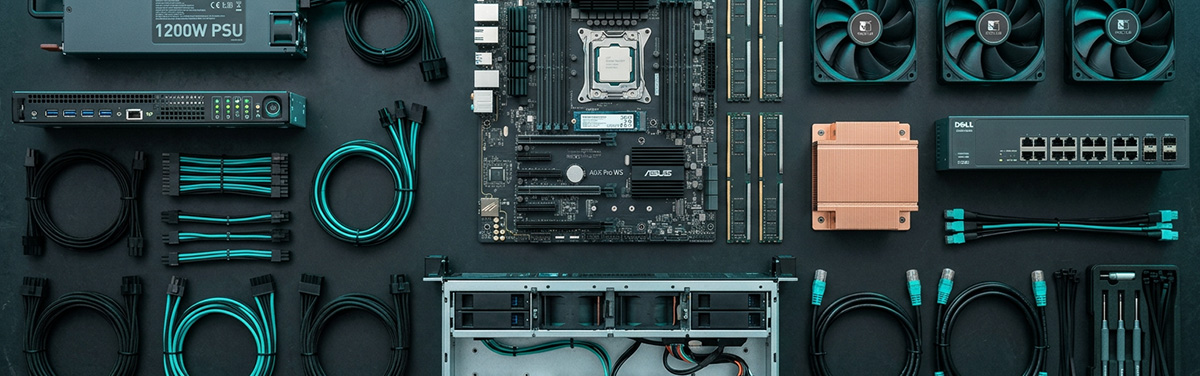
Purchasing a server is only the beginning. The total cost of ownership (TCO) of on-premise infrastructure includes expenses that accumulate steadily over years:
- High upfront capital expenditure (CAPEX) on hardware, racks, and cooling systems
- Hardware refresh cycles every 3 to 5 years
- Rising electricity and cooling costs
- Physical space rental, which is particularly costly in land-scarce Singapore
- IT manpower for maintenance, support, and incident response
- Downtime risks from hardware failure
- Ongoing cybersecurity exposure and patching responsibilities
In Singapore’s context, physical space costs are an especially significant factor. Singapore ranks second globally for data centre construction costs in 2025, at US$14.53 per watt, behind only Tokyo. Land scarcity and strict planning regulations continue to drive up the cost of maintaining on-premise infrastructure locally.
Energy costs add further pressure. According to the IEA, cooling systems account for 7% to over 30% of total data centre energy consumption, depending on facility efficiency. For less efficient enterprise server rooms, that figure sits at the higher end.
When every cost category is factored in, industry research shows that on-premise infrastructure is 30% to 71% more expensive than cloud-based alternatives over a 5 to 10-year period. As hardware prices continue to climb, this gap will only widen.
The Alternative: Edge Cloud
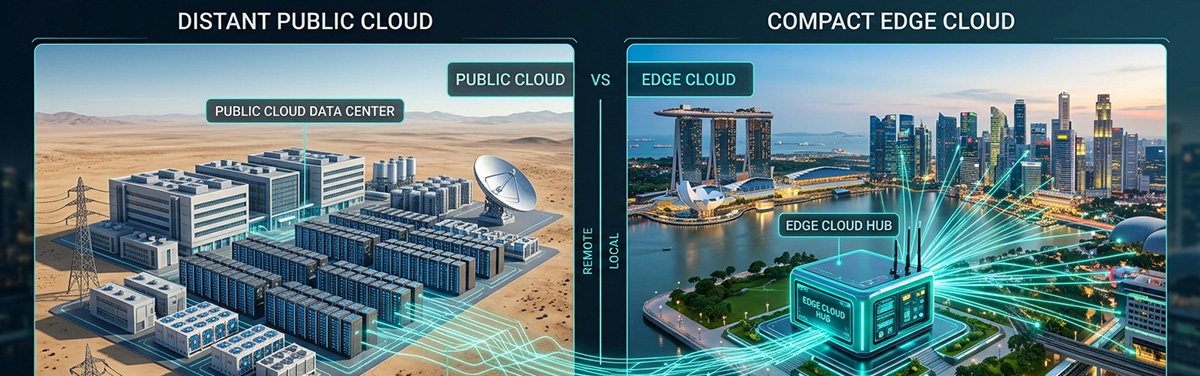
While on-premise costs are rising, many organisations remain hesitant to move to public cloud. The concerns are legitimate. Public cloud introduces latency that can degrade performance for real-time applications, and sending sensitive data to overseas servers raises compliance and data sovereignty questions under Singapore’s PDPA.
This is where Edge Cloud comes in.
Edge Cloud processes data closer to the user unlike public cloud that routes data to a distant centralised data centre. This proximity advantage directly addresses the latency limitations of public cloud. Research shows that edge computing delivers latency of 1 to 10 milliseconds, compared to 50 to over 200 milliseconds for public cloud. In practical terms, SPTel’s Edge Cloud can deliver application performance up to 10 times faster than public cloud.
For concerns over data sovereignty, Edge Cloud hosted in Singapore directly resolves the compliance challenge. Hosting data locally simplifies PDPA cross-border transfer obligations and ensures that data remains subject to Singapore’s legal jurisdiction. SPTel’s Edge Cloud takes this further by hosting all data within Critical Information Infrastructure (CII) locations in Singapore, providing an additional layer of physical security and regulatory assurance.
Edge Cloud is also cost competitive. It operates on a pay-as-you-go model with no upfront infrastructure investment, shifting expenditure from capital outlay to predictable monthly operating costs.
Significant Cost Savings with Edge Cloud
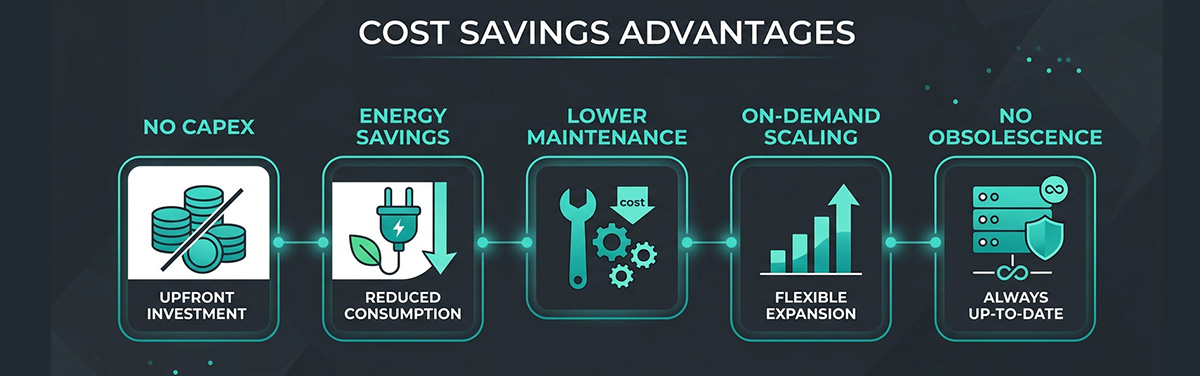
Switching from on-premise servers to SPTel Edge Cloud can reduce your infrastructure costs in several meaningful ways.
1. Eliminate Hardware CAPEX
There is no upfront investment in physical servers, racks, or cooling systems. Compute and storage resources are accessed as a service, on demand. With server hardware prices rising sharply, avoiding procurement cycles entirely is a significant financial advantage.
2. Reduce Energy and Facility Costs
Running on-premise servers in Singapore requires ongoing electricity for both hardware and cooling, as well as physical space that carries a premium price. Edge Cloud removes these costs entirely. The IEA notes that IT equipment accounts for roughly 60% of total data centre energy use. Offloading this to a managed provider means your organisation no longer carries that energy burden.
3. Lower Maintenance and Support Costs
Hardware servicing contracts, emergency component replacements, and IT staff time for routine maintenance add up considerably over a server’s lifecycle. With Edge Cloud, infrastructure management is handled by the provider. Your IT team is freed to focus on strategic work rather than maintenance.
4. Scale on Demand
Pay only for the compute and storage you use. Scale up or down instantly without hardware procurement delays, minimum order quantities, or the risk of over-provisioning. This flexibility is particularly valuable during periods of rapid growth or fluctuating demand.
5. Avoid Hardware Obsolescence
With tech refresh happening every few years, on-premise hardware quickly becomes outdated, especially as AI-driven workload requirements advance rapidly. With Edge Cloud, infrastructure upgrades are managed by the provider. Your organisation always has access to current technology without the capital outlay of a refresh cycle.
The result is a lower total cost of ownership and a more predictable monthly operating expenditure (OPEX).
Why SPTel Edge Cloud?
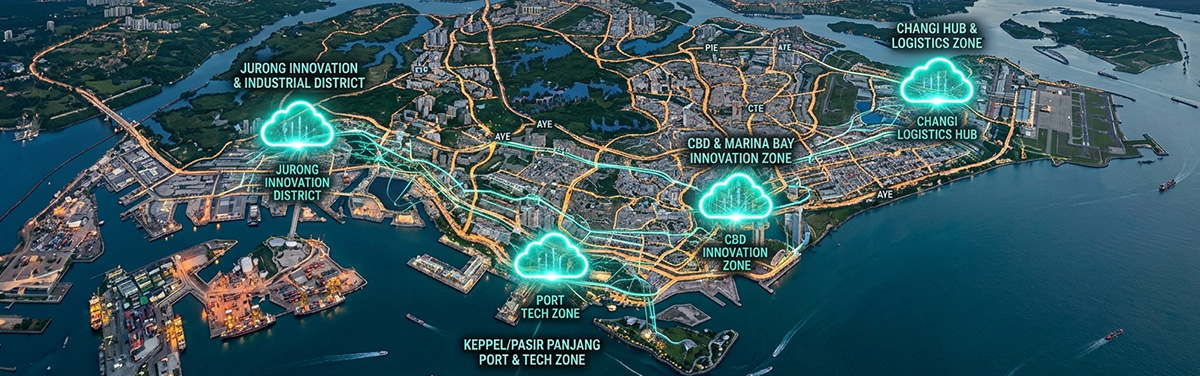
SPTel’s Edge Cloud is designed for Singapore enterprises that require performance, security, and cost efficiency from a single solution.
The network delivers ultra-low latency of under 1ms, supported by SPTel’s diverse fibre network that runs alongside Singapore’s power network cables. This independent routing provides resilience that incumbent telco networks cannot replicate. Edge hubs are distributed across four zones in Singapore’s key commercial and industrial districts, bringing compute resources close to where your applications and users are.
All data is hosted within CII locations in Singapore, with 24/7 Integrated Operations Centre (IOC) monitoring. This provides the physical security and data sovereignty assurances that regulated industries require, and supports compliance with Singapore’s PDPA obligations.
Through an intuitive cloud management portal, your team can spin up compute, storage, or network resources within minutes and manage hybrid cloud deployments from a single console. There are no data transfer fees and no hidden charges, making cost management straightforward from day one.
Ready to Reduce Your Infrastructure Costs?

Rising hardware prices are not a temporary blip. For Singapore enterprises still running on-premise servers, the cost gap will only widen as AI-driven component shortages persist through 2027 and beyond.
Speak to our specialists for a cost comparison assessment and find out how much your organisation could save by making the switch to SPTel Edge Cloud.