
Protecting Your Singapore Business from Escalating Cyber Threats in 2026

Singapore’s cyber threat landscape has reached a critical point. In 2024, the country recorded over 21 million cyberattacks, the highest volume in Southeast Asia, according to the Cyber Security Agency of Singapore. More concerning, over 8 in 10 organisations here have experienced a cybersecurity incident in the past year alone.
The financial stakes are significant. For SMEs, the average cost of a single data breach stands at SGD 120,000, yet most allocate less than SGD 10,000 annually to cybersecurity. That gap represents serious exposure for any organisation that has not yet reviewed its defences.
The threat types are also evolving. Phishing attacks surged by 49% in 2024, with over 6,100 reported cases. Twelve percent of those phishing emails were AI-generated, making them harder to detect. Beyond phishing, Singapore ranked 7th most attacked country globally in Q4 2024 and was identified as the third-largest source of DDoS attack traffic worldwide.
Looking ahead, quantum computing presents a longer-term but equally serious challenge. Cryptographically relevant quantum computers capable of breaking current encryption standards could emerge within the next 5 to 15 years. Attackers are already preparing, harvesting encrypted data today to decrypt it once that capability becomes available.
Understanding the specific threats your organisation faces is the first step to building an effective defence. The sections below break down each major threat category and what IT teams can do to address them.
Ransomware and Malware: The Growing Threat to Singapore Businesses

Ransomware remains one of the most disruptive threats facing organisations in Singapore. In 2024, reported ransomware cases increased by 21%, with 159 incidents recorded and cumulative payments reaching US$813.55 million, according to The Independent Singapore. Globally, the picture is worse. A ransomware incident now occurs every 19 seconds, with attacks rising 32% in 2025 per the Sophos State of Ransomware 2025 report.
Manufacturing has been the hardest-hit sector in Singapore, accounting for 31% of ransomware attacks, with MNCs and listed firms bearing a disproportionate share. The scale of damage is not limited to operations. Infected computer infrastructure in Singapore rose by 67%, from 70,200 compromised systems in 2023 to 117,300 in 2024, according to GOV Insider.
Threat actors behind these attacks include well-known groups such as Akira, LockBit, and Phobos. Their demands typically range from USD 100,000 to several million dollars. In one high-profile case, a Singapore law firm reportedly paid USD 18.9 million following a ransomware attack, a stark reminder of the financial devastation a single breach can cause.
For IT leaders, this underscores the importance of having network-level threat detection in place before an attack reaches critical systems.
DDoS Attacks: Singapore’s Financial Sector Under Siege

Distributed Denial of Service (DDoS) attacks have intensified sharply in Singapore. Over 87,000 DDoS attacks were recorded in 2024, with attack volumes surging 166% between September and October alone, according to the Security Quotient 2025 Outlook. Singapore’s share of global DDoS attack traffic nearly doubled, climbing from 3.6% in 2023 to 6.8% in 2024 per StormWall’s APAC report.
Banks and payment processors were the primary targets, followed closely by telecommunications and Internet service providers. Attackers are also growing more sophisticated in their methods. Across the APAC region, API-targeted DDoS attacks grew by 86% year-on-year, moving beyond volumetric floods to target application-level services directly, according to StormWall’s APAC DDoS Report (Q2 2025).
The operational impact is immediate. A successful DDoS attack can take critical services offline within seconds, causing both financial losses and reputational damage that can take far longer to recover from. For organisations that depend on always-on availability, this is a risk that cannot be left unmitigated.
Firmware Vulnerabilities: The Risk Hidden in Your Network Equipment
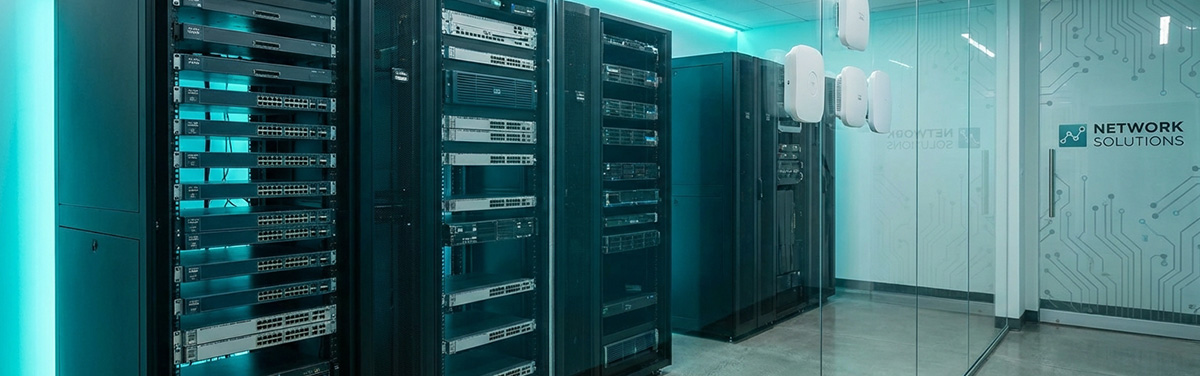
Every router, switch, access point, laptop, and CCTV camera running on your network has firmware — and outdated firmware is one of the most commonly overlooked security risks in organisations today. As businesses grow more reliant on connected network equipment for day-to-day operations, the firmware running on these devices has become an increasingly attractive target for attackers.
The numbers reflect this. The number of high and critical firmware CVEs has nearly quadrupled since 2015, with the National Vulnerability Database recording a fivefold increase in firmware attacks over the last four years per USENIX Security 2024. Yet less than a third of organisations test embedded firmware regularly, while 47% test only occasionally or not at all, according to Nozomi Networks. Poor credential handling and brute-force attacks remain the most exploited weaknesses.
The challenge for IT teams is straightforward: the more devices on a network, the harder it becomes to track firmware versions and patch status manually. A single unpatched device can serve as an entry point for attackers to move laterally across the network.
The Quantum Computing Threat: Why Current Encryption Is No Longer Enough
Quantum computing may still feel distant, but its implications for data security are already being felt today. Studies suggest that quantum computers capable of breaking RSA-2048 encryption could emerge within 5 to 15 years. Google Quantum AI researchers have demonstrated that RSA-2048 could theoretically be broken in under a week using fewer than one million noisy qubits, according to The Quantum Insider.
The more immediate concern is what is known as “harvest now, decrypt later.” Sophisticated threat actors are already intercepting and storing encrypted data today, with the intention of decrypting it once quantum computing becomes viable. Diplomatic communications, military intelligence, and proprietary corporate data are all known targets of this approach, as noted by Sectigo and Palo Alto Networks.
Regulators are responding. The US government has mandated the , with a full transition to quantum-resistant cryptography required by 2035. In August 2024, NIST finalised its first set of post-quantum cryptography standards, FIPS 203, 204, and 205, providing organisations with a clear framework to begin transitioning.
For CIOs and IT leaders managing sensitive or long-term data, the window to prepare is narrowing.
How SPTel Helps: A Comprehensive Security Approach

Addressing today’s cyber threats requires more than a single product. IT teams need a layered set of solutions that work together to protect the network perimeter, web applications, connected devices, and long-term data integrity. Here is how SPTel’s portfolio addresses each layer.
SPTel’s Managed vFirewall (ThreatProtect): Unified Threat Protection
SPTel’s Virtual Firewall comes with Unified Threat Protection built in, providing enterprise-grade firewall security through its Managed Perimeter Protection solution, ThreatProtect. It combines advanced threat intelligence, AI-driven detection, and automated response to stop ransomware, malware, viruses, phishing, and spam before they can spread across the network.
Unlike cloud-hosted firewalls deployed on AWS or Azure, SPTel’s vFirewall is installed directly on its core network infrastructure. This means data stays within the SPTel network, reducing latency and minimising packet loss. Organisations get dedicated firewall instances, not shared deployments, with real-time visibility across endpoints, networks, and cloud environments, and rapid automated response when threats are detected.
As a fully virtualised solution, the firewall is hosted and managed within SPTel’s private cloud environment. Organisations do not need to invest in on-premise hardware, and there is no burden of managing maintenance contracts or firmware upgrades after deployment. SPTel handles all of that, freeing up IT teams to focus on other priorities.
SPTel’s Virtual Web Application Firewall: Web-Specific Security
Web applications, customer portals, and public-facing websites require their own layer of protection. SPTel’s Virtual Web Application Firewall (vWAF) monitors and filters HTTP/HTTPS traffic comprehensively, blocking application-layer exploits including SQL injection, cross-site scripting (XSS), broken authentication, and other threats from the OWASP Top 10.
As with ThreatProtect, the vWAF is deployed within SPTel’s core network rather than outside it. This keeps web traffic within a controlled, high-performance environment and avoids the latency introduced by solutions that route traffic externally.
DDoS Protection: SPTel’s Clean Pipe Network
SPTel’s When an attack is identified, organisations receive an immediate alert. For those who prefer to manage their response directly, on-demand mitigation is available at any time. For organisations that require instant, automatic resolution without manual intervention, an auto-mitigation subscription provides continuous protection without the need to act in the moment.
Given Singapore’s position as both a major target and source of DDoS traffic, having detection and mitigation built into the network layer is a meaningful advantage.
PatchSense AI: Simplified Vulnerability Management
PatchSense AI, is an AI-powered patch management dashboard designed to take the manual burden out of vulnerability tracking. It monitors the latest cybersecurity advisories and published vulnerabilities from technology providers and security agencies worldwide, then cross-references these against each organisation’s digital infrastructure.
When a threat is identified, PatchSense AI issues an alert so engineers or service providers can respond promptly. Each threat is classified using the organisation’s own customised risk matrix, ensuring that response priorities align with internal policies. Remediation recommendations are also provided, reducing the time needed to act.
The centralised dashboard gives IT teams a single view of patch status across all monitored devices. For organisations striving for high efficiency with limited cybersecurity headcount, PatchSense AI significantly reduces reliance on manual monitoring without requiring complex set-up or agent installation.
Quantum Key Distribution (QKD) and Post Quantum Cryptography: Next-Generation Quantum-Safe Networking
For organisations managing sensitive, long-term data, Quantum-Safe Networking is no longer a future consideration. It is a present one.
In August 2024, SPTel joined MAS, DBS, HSBC, OCBC, UOB, and SpeQtral in a landmark collaboration to advance quantum security within Singapore’s financial sector, as announced in the MAS Media Release. SPTel has since completed a proof-of-concept sandbox demonstrating that Quantum Key Distribution (QKD) is viable for financial services, validating its ability to detect eavesdropping and prevent unauthorised access.
SPTel and SpeQtral are also active contributors to Singapore’s National Quantum-Safe Network Plus (NQSN+) initiative, which is building a nationwide quantum-safe infrastructure using QKD and post-quantum cryptography. Organisations can deploy QKD now to protect sensitive data against future quantum threats, directly addressing the “harvest now, decrypt later” risk that is already underway. For more details, refer to the SPTel QKD Sandbox Report.
To support PQC deployments, SPTel has partnered Fortinet for customer premise equipment (CPE) that can deliver a practical, managed pathway towards post-quantum cryptographic resilience for enterprise customers. Fortinet’s PQC enabled CPEs that serve as the secure customer edge when placed at branch offices, campuses, data centres or remote sites. This supports for policy enforcement, segmentation, encrypted connectivity and threat protection without requiring a full redesign of the underlying WAN from the outset. Integrated with SPTel’s connectivity, the solution acts as a layered service with SPTel providing the resilient underlay through local, international and data centre connectivity, while the PQC enabled CPE secures the edge and protects traffic entering or leaving the customer environment.
From a customer perspective, combining QKD and PQC solutions in a hybrid approach to quantum security results in stronger security, better operational clarity and improved cost efficiency.
Securing Your Business Against Current and Future Threats

Singapore’s cyber threat environment is escalating across every vector: ransomware, DDoS, phishing, IoT vulnerabilities, and quantum computing. No single tool is sufficient on its own. What organisations need is a layered defence strategy that covers network protection, application security, proactive vulnerability management, and long-term data integrity.
With SPTel, you can build that strategy on a single, trusted provider. As the only telco in Singapore operating an end-to-end software-defined network with built-in DDoS protection, dedicated vFirewall infrastructure, AI-powered patch management, and active involvement in Singapore’s national quantum-safe initiative, SPTel is positioned to support your organisation’s security needs today and in the years ahead.
Contact SPTel today to schedule a cybersecurity assessment and find out how our solutions can protect your business.