
What is Sustainable Technology in 2026? Examples & Case Studies

Sustainable technology refers to innovations designed to meet current needs without compromising the ability of future generations to meet theirs. From renewable energy systems to smart farming platforms, sustainable technologies are being adopted across industries worldwide to reduce environmental impact, improve resource efficiency, and address food security challenges.
The market for these technologies is growing fast. The global smart agriculture market was valued at USD 26.27 billion in 2025 and is projected to reach USD 29.48 billion in 2026, growing at a CAGR of 12.20% through 2034, according to Precedence Research. The broader global agritech market reached USD 34.58 billion in 2025 and is forecast to grow to USD 38.56 billion in 2026, with Asia Pacific identified as the fastest-growing region. Smart farming, which integrates big data, IoT, cloud computing, and sensors to track, monitor, automate, and analyse farm operations, is one of the most impactful sustainable technology examples emerging today.
In Singapore, this is underscored by the government’s “30 by 30” initiative, which aims to produce 30% of the nation’s nutritional needs locally by 2030. Achieving this goal requires a combination of adequate urban farming spaces, increased production capacity, and the adoption of technology-driven sustainable solutions.
What is Sustainable Technology?
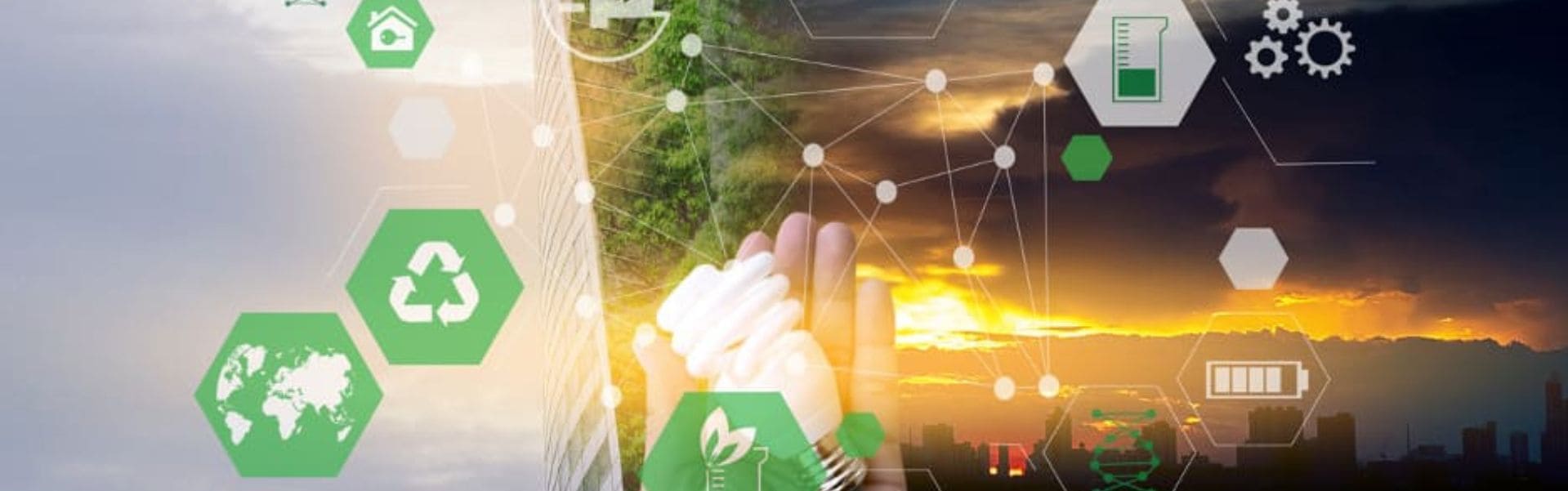
Sustainable technology are solutions that promote environmental, social, human rights, and economic sustainability. These technologies aim to minimise adverse impacts on the environment and encourage resource conservation.
For instance, companies often employ sustainable technology to reduce the consumption of non-renewable natural resources, lowering carbon emissions while promoting renewable energy sources. There are also industry-specific technologies for agriculture, transportation, and waste management practices, among others.
What are the 5 Pillars of Sustainable Technology?

As defined by the Economic Development Board (EDB), here are Singapore’s five key pillars of sustainable technology:
- Infrastructure: This refers to the systems and structures necessary for sustainable development, which includes engineering and infrastructure consultancy, legal and accounting advisory services, project financing, and support from international organisations.
- Built Environment: Sustainable architecture aims to minimise environmental impacts and optimise resource utilisation with green building solutions.
- Clean Energy: Clean energy aims to decrease the dependency on fossil fuels and increase the use of renewable energy.
- Water and Environment: Thia involves managing and conserving water resources and protecting natural ecosystems with innovations like water reclamation and seawater desalination.
- Urban Mobility: Singapore relies on efficient transportation options to get around its limited geographical area and high population density. This makes it a desirable location for businesses to create, test, and market smart mobility solutions.
What Are Examples of Sustainable Technology?

1. Smart Farming
Smart farming is an advanced technology infrastructure that tracks, monitors, automates, and analyses farm operations. It involves utilising big data, cloud computing, the Internet of Things (IoT), and sensors to improve farming processes.
However, urban farms have many different aspects to monitor, resulting in purchasing multiple IoT devices from different vendors. This can increase the complexities of deployment as it would require integration across different dashboards.
To address this challenge, SPTel introduced its IoT-as-a-Service platform, a protocol agnostic solution which connects IoT sensors across different providers on a single platform. This one-stop solution lets urban farms monitor and manage various sensors and applications easily without having to invest in time and R&D for integration, thereby allowing farmers to focus on providing quality crops instead of managing multiple solutions from different vendors.
2. Smart Households
Smart households use sustainable technology, such as smart metering, to monitor and manage their energy, water, and gas consumption. For instance, Singapore’s national water agency, PUB, is replacing mechanical water meters with smart water meters that collect and make data on water usage accessible to consumers. This data can help households become more efficient in their water usage.
To support the nation’s adoption of sustainable household technology, SPTel has launched Singapore’s first Sensor Network powered by LoRaWAN. This network is built for national-scale deployment, allowing authenticated sensor devices to connect wirelessly to its secure IoT-as-a-service platform and backhaul connectivity.
With this network in place, IoT solution providers for massive IoT deployments can easily connect to a ready Sensor Network instead of investing in building and maintaining their own network, making it more accessible, faster, and cost-effective for deployment.
3. Smart Transportation
Smart transportation combines cutting-edge technology with transport systems to enhance efficiency, safety, and sustainability.
In particular, emerging technologies like smart digital junctions can play a significant role in sustainable transportation. Smart junctions can also reduce start and stop for vehicles by analysing their speed and informing the driver to maintain a certain speed so they can, for instance, reach the traffic light when it turns green.
On top of that, sensors can even detect roadworks or accidents. Vehicles can be informed in advance to stay clear of the lane. This reduces congestion and improves overall efficiency. By using smart digital junctions, transportation can become more sustainable by reducing carbon footprint while improving traffic flow.
Such deployments will require real-time responsiveness for the connected applications. With SPTel’s Edge Cloud solution, computing can be done close to the data source for optimum performance.
Why is Sustainable Technology Good for Your Business?

While hitting sustainability business growth goals, your business can also automate processes and boost operations. Let’s take a look at this case study:
By deploying SPTel’s IoT-a-a-S, AbyFarm, a local agritech player has enabled farm-to-table traceability for improved food safety and security, enhanced modern food production processes, and improved productivity and crop yield. They have also reduced manpower requirements needed to monitor crop growth and conditions.
In addition to more efficient operations, businesses can also receive support from the government for their sustainability efforts:
One source of support is Singapore’s “30 by 30” initiative, aimed at producing 30% of Singapore’s nutritional needs by 2030. The initiative supports local agri-food companies and urban farms that leverage sustainable technology, such as SPTel’s IoT-a-a-S platform, which can help businesses defray digitalisation costs through an Enterprise Singapore (ESG) grant. The initiative encourages agritech companies to adopt innovative solutions and technology for less food waste and reduced reliance on imported goods.
Kickstart Your Sustainability Journey with Business-Friendly Solutions

As Singapore pushes towards becoming a sustainable smart nation, Internet of Things (IoT) technology will be crucial in enabling smart farms, households, transportation, and more. This technology is essential for the long-term success of the country’s sustainability program.
If you’re ready to embark on your sustainability journey, SPTel’s IoT-a-a-S platform, and Sensor Network powered by LoRaWAN, can help you get started. The platform operates on an ‘as-a-service’ model, making it accessible to businesses without requiring them to make significant upfront investments to build and maintain their platforms.