
Quantum Cyber Security: What CTOs Should Anticipate in 2026
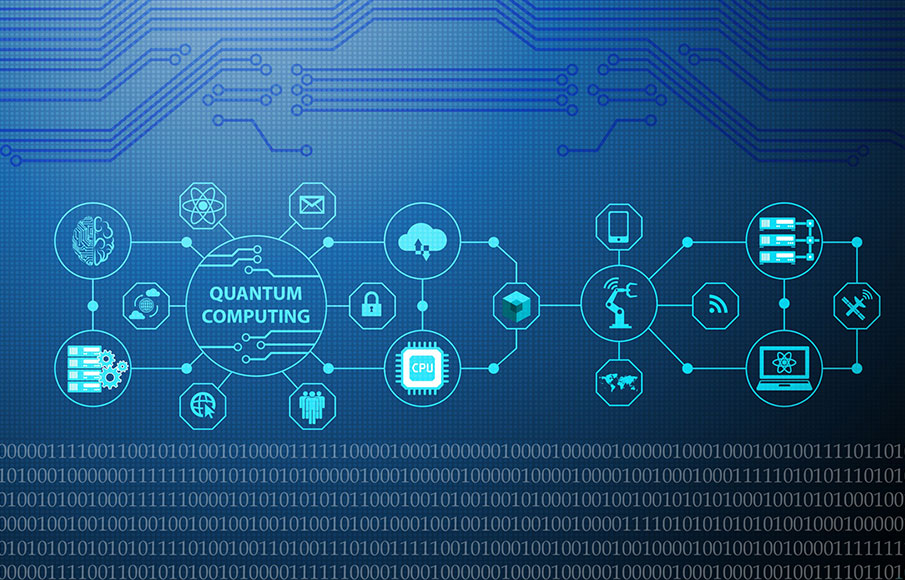
Quantum computing is no longer science fiction. As quantum capabilities advance faster than many anticipated, organisations that handle sensitive data face a growing and very real threat to their current encryption infrastructure.
The urgency to act is reflected in global investment. The global quantum cryptography and post-quantum security market was valued at USD 2.1 billion in 2025 and is projected to reach USD 11.2 billion by 2034, growing at a CAGR of 19.8%. Quantum Key Distribution (QKD) held the largest technology share at 38.4% of total market value in 2025. Meanwhile, demand for post-quantum solutions is accelerating: cybersecurity companies reported a 350% increase in demand for post-quantum digital certificates in 2025, while 70% of banks worldwide are actively transitioning to quantum-proof encryption strategies. In 2025 alone, global PQC adoption surged by 45%, with over 60% of enterprises in defence, finance, and telecoms accelerating quantum-resistant upgrades.
Quantum computing presents new challenges for cybersecurity, with the potential to render current encryption techniques obsolete. In response, quantum cryptography can be used to create quantum-safe networks that protect data and render it inaccessible even to adversaries with substantial processing power. This article outlines what CTOs and security leaders should anticipate as the quantum era approaches, and how organisations can begin preparing today.
1: Post-Quantum Cryptography

Quantum computing presents formidable challenges to current cryptographic algorithms. Traditional cryptography relies largely on the difficulty of factorising large numbers. A quantum computer harnesses quantum mechanics’ principles to perform calculations at speeds that are completely incomparable to classical computers, and are thus able to make these calculations extremely efficiently. Therefore, data encrypted under current methodologies may be vulnerable to decryption by quantum algorithms that hold vast computing power, which could feasibly break widely-used encryption schemes like RSA and ECC.
This essentially makes modern encryption methods obsolete. Quantum cryptography, however, seeks to turn this quantum threat into an advantage for cybersecurity as a whole. By employing Quantum Key Distribution (QKD), it’s possible to create communication channels that are inherently secure. An eavesdropper attempting to intercept the key would unavoidably create errors in the transmission , thereby alerting involved parties to the presence of an intrusion.
2: Harvest Now, Decrypt Later

Harvest Now, Decrypt Later (HNDL) attacks are an ongoing issue. They’re straightforward in execution: cybercriminals collect encrypted data today with the intention of decrypting it in the future when quantum computers become widely accessible. The underlying assumption is that the current encryption standards will be easily breakable with quantum computing power, and that sensitive data will still be relevant in the near future.
Organisations are already noting the potential risk of HNDL attacks. Personal information, financial histories, and other pieces of valuable data can remain sensitive for long periods of time, and once quantum computing becomes widespread, it’s believed that harvested data can quickly be exploited.
As this threat looms, data security experts advocate for the transition towards quantum-resistant cryptographic methods, to proactively safeguard sensitive data against the inevitable increase in computing power.
3: Blockchain Vulnerability

Blockchain technology is used to power cryptocurrency, which has been creating an increasingly higher economic impact in recent years. This currency can be relevant for businesses and investors who store their assets in it. However, a large percentage of these currencies store their information using public-key cryptography (PKC). This cryptographic method involves a public key for encryption and a private key for decryption, ensuring secure transactions. Quantum computing, however, possesses the potential to code-break this private key through its advanced calculation power.
This potentially places billions of dollars in currency at risk of quantum attack vectors. Pursuit of quantum security measures is vital for the continued reliability, effectiveness, and functionality of blockchain technologies in a future where quantum computing is the norm. Ensuring the resilience of blockchain security against the impending quantum threat is not just necessary, it’s critical to the trust and functionality that blockchains provide across various sectors, from finance to supply chain management.
Solutions- How Quantum-Safe Networks Counter Future Threats

Quantum Computing presents new challenges for cybersecurity, with the potential to render current encryption techniques obsolete. In return, Quantum cryptography can be used to create Quantum-Safe Networks that protect data and render it inaccessible even to hackers with overwhelming processing power.
One example of quantum resistant cryptography is Quantum Key Distribution (QKD). QKD ensures secure communication by encoding and transmitting cryptographic encryption keys in a quantum state, typically using photons. This key exchange method is intrinsically secure because any attempt at observing the contents disrupts the quantum state, alerting the parties involved of a potential breach.
Businesses can effectively shield their sensitive data from quantum attacks with quantum-safe network, such as those offered by SPTel. Utilising QKD technology creates an environment where data in transit is protected against both present and future threats, thereby future-proofing the organisation from the quantum era.
- Pre-emptive Defence and Long-term Viability: By adopting quantum-safe security measures now, businesses safeguard their operations against forthcoming quantum threats.
- Unbreakable Encryption: QKD offers an encryption method that remains secure, even in the face of quantum decryption techniques.
The importance of these solutions cannot be overstated as they provide a crucial foundation for robust cybersecurity in the quantum age. This proactive approach to cybersecurity not only defends against current risks but also positions businesses at the forefront of secure operations in a quantum future.
Secure Your Data With SPTel

Through our recently established quantum-safe network, SPTel provides a concrete and future proof solution to safeguard sensitive data against quantum cybersecurity threats.
Leveraging our ultra-low latency network, SPTel is able to achieve optimum key delivery rates on our resilient and diverse network. Our Quantum Key Distribution equipment are also housed within Critical Information Infrastructure to ensure the highest physical security for our solution.
Businesses seeking to remain secure in the face of tech developments are able to engage our Quantum Key Distribution services and achieve a reliable and secure route for data encryption.
Remain resilient against threats of the future, and reach out to us today.